


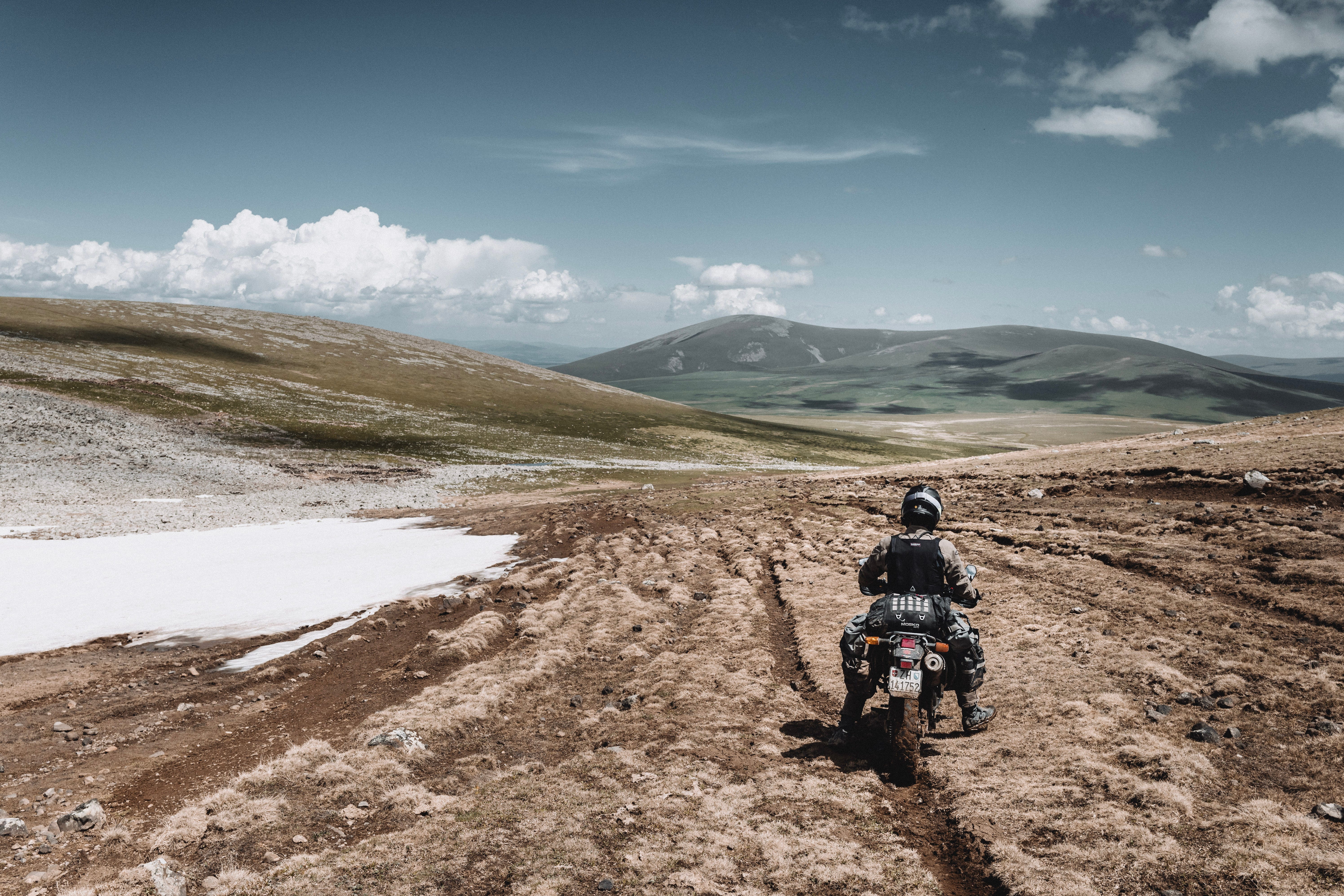
In my last post, I talked about the mental side of prepping for a big motorcycle trip and how easy it is to overpack out of fear and how it can all feel like a full-time job. I also promised I’d eventually share our actual packing list.

So, here it is.
Below is the list we made for our 100-day, 15,000km ride to Kazakhstan on our Suzuki DR650s but instead of just dropping the raw spreadsheet, I’m also treating this as a post-trip review where I breakdown what we packed, what we’d absolutely take again, and what we would leave behind next time.
Throughout this list, you’ll notice I frequently split items into “Gion” and “Dad” categories. We ran different setups for things like luggage, sleep systems, and clothing. I’m formatting it this way to highlight a crucial reality of adventure riding: there is absolutely no “one size fits all.” What works perfectly for my dad’s comfort might not match my budget or riding style, and vice versa.
Note: If a category doesn’t have a specific “Gion vs. Dad” breakdown, it means we either used the exact same gear, or we shared a single item (like our camping kitchen) to save on precious space and weight.
For most items, I’ll give a generic name, the actual model we took, and a quick one-liner review. If you’d like a more thorough, in-depth breakdown of any specific piece of gear, drop a comment below!
Remember though, you don’t need the top-of-the-crop, best brand of anything. The specific items we took often came down to budget, availability, fit, and ultimately what just worked for us. What works for you might be completely different, and that is okay.
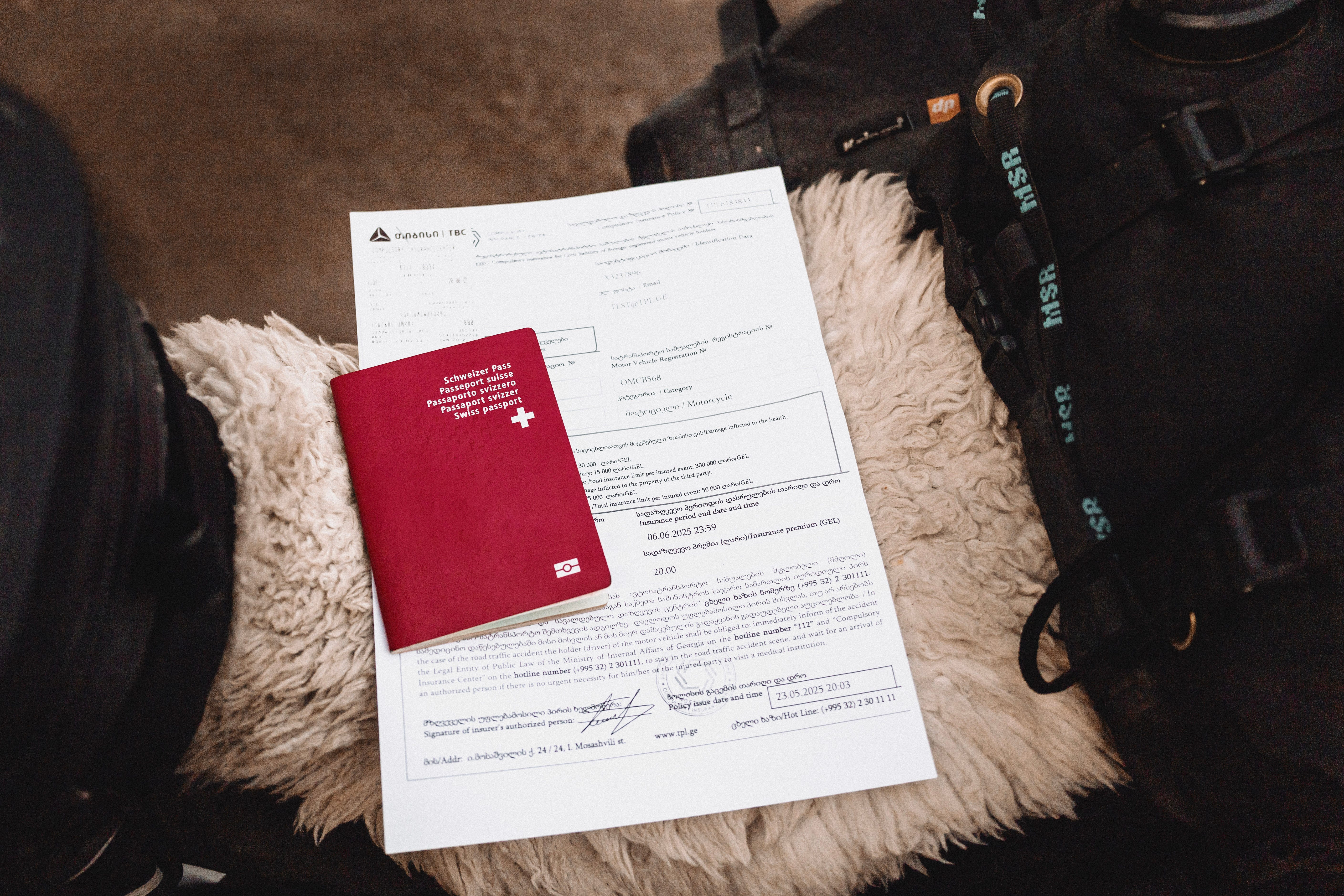
Admin & Paperwork
This is the boring part but it is the only category that is absolutely super duper necessary, where “overpacking” is somewhat acceptable. If you don’t have the right papers, the trip stops.
You’re gonna be asked to show these a lot, so keep them easily accessible, in a very water tight place.
Passport & Copies: You don’t need a ton of copies, but make sure you always have 5-10 with you and restock at hostels. The Pamir Highway for example is famous for needing to give one away at every checkpoint. We had to give 8.
Passport Photos: You’ll need a few for random visas and visas on arrival. You can get them done in major cities, but land borders are often in the middle of nowhere. So have some aside.
Driving License & International Driving License (IDL): The IDL is invalid without your original driver’s license. So carry both. I did my trip to KZ without an IDL and might have lucked out by never being asked for it. Next time, I’d absolutely take one, even if forums say otherwise.
Vehicle Registration (Carte Grise): Checked at every single border. Make sure the document is in your name and not somebody else’s. It’ll save you a lot of trouble.
Carnet de Passage en Douane (CPD): This is kind of your bike’s passport. Not all countries need this. Most don’t actually. We had to get one done for traversing Iran but that was it. It takes about a month to process the order and I believe you can only get it done in your bike’s registration country. Don’t lose it and make sure it is correctly stamped upon entrance and exit of the countries that need it because some border guards are completely unaware of what to do with it.
Basic Motorcycle Insurance : You probably need one to ride in your own country anyway. If you’re based in Europe it probs also covers the entire continent. Once you’re out of Europe, many countries will legally require you to buy local insurance.
Health & Motorcycle Insurance: You’re on a motorcycle on a multi-month trip, so assume you will have an accident or at least a bike incident. It’s almost inevitable. To me, it doesn’t make sense to not get one.
Cash: Cash is king, especially 100 USD bills. Across central Asia they’re the most widely accepted bills for exchange. You could also get cash from ATMs but they often come with massive fees upward of 10%. You’re way better off exchanging. Smaller bill denominations are often not accepted or come with bigger exchange fees. Keep the bills crisp, uncreased, ideally printed somewhat recently. Money exchangers will sometimes reject a bill if it has a tiny tear or fold. Stash it all in multiple hiding spots.
The Luggage Setup
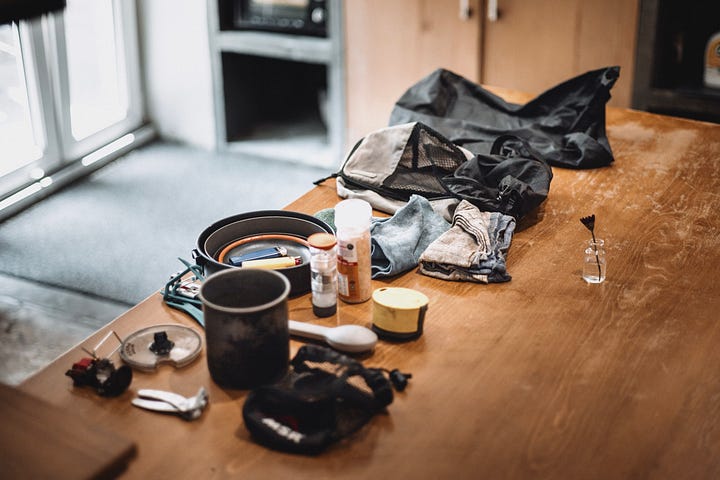
Dad and I ran different luggage brands on our DR650s, but the philosophy was the same: rackless soft luggage. We tried everything: hard paniers, racked soft bags, banana style giant loop bags and settled on rackless bags because we wanted to be as lightweight as possible and as nimble as possible. (Also because they look like the real deal). We found that 80 liters was the sweet spot. Trimming down further is definitely possible, but it would require sacrificing tools or investing in more expensive, ultra-lightweight gear.
Gion’s Setup:
Tank bag: Enduristan Sandstorm 4S. Honestly, I would not recommend it. It lacks organizational pockets, so my stuff just ended up in a messy pile. It has almost no internal padding, so I hated having my camera vibrating inside. It held up against rain, but I took it off for river crossings since it’s only a zipper and not fully waterproof. I’d definitely look for a different one next time. Also the transparent top map holder started ungluing at one point. And the map holder doesn’t have a secure way to close it so it felt like whatever I put inside (a map, documents, my phone with Google maps) could fly away easily.
Luggage bags: Mosko Reckless 80. Great stuff. I bought a Gen 2 second-hand, and it was amazing. I always wondered why they have such a massive reputation and cost so much, but now I get it. They’re incredibly rugged, and the system just works perfectly. 10/10 would buy again.
Dad’s Setup:
Tank bag: Giantloop Fandango. Solid bag but the zipper system to take it on and off the bike was not great.
Side bags: Kriega OS-Base pack with 2x18L bags.
Rear bag: Kriega US-40.
Backpacks
Neither of us wore a backpack, and we never felt like we needed one. I did wear my Alpinestars Techdura jacket (more on that below), which has a built-in “tactical backpack” that’s basically just a bunch of pockets. But whether you wear a backpack or not, here is the golden rule: ALWAYS keep your passport and a stash of cash on your actual person, not on the bike. If the absolute worst happens and your bike tumbles down a mountain with all your luggage attached to it, you can still hitchhike to the nearest airport and get the heck out of the country.
Pro-Tip: The Dedicated First Aid Bag
We used a small Enduristan front mudguard/fender bag for one thing and one thing only: the first aid kit. This was one of our best decisions. We always knew exactly where it was, and it was instantly accessible. The idea came from a previous trip where I got a deep cut on my finger and spent minutes frantically digging through dad’s bags with my bloody finger while he was having beer I don’t know where. Was it in the left pannier? The top bag? Stuffed at the bottom? (It was). In a critical situation, you do not have time to dig. You need a reliable quick-access spot that you never touch unless it’s an emergency.
Camping, Living & Cooking
We opted to mostly rough it, but the few luxuries we brought were heavily debated.
Tent:
Gion: Cheap second hand 1.5p tent. Bought it for 30 bucks. It’s nothing special and wasn’t very compact at all, and it didn’t fit inside my Mosko Bags, so I had it strapped under the Mosko beaver tail. No complaints though. Would use it again.
Dad: Nemo Osmo Dragonfly Bikepack 2P & Ground sheet. Lightweight, packed incredibly small inside the Kriega side bag, and survived the steppe winds. The ground sheet is mandatory though. You’ll be scared to damage the inner sheet without it as soon as you’re on anything that isn’t grass.
Sleeping bag:
Gion: Millet synthetic 0ºC sleeping bag. It’s a bit bulky, but it’s what I had. I knew it worked for me and didn’t have the budget for a warmer and more compact down bag. This is where I’d spend money first for the next trip. The space savings of down are massive.
Dad: Sea to Summit Spark Pro sleeping bag, S2S Reactor liner
Mattress:
Gion: Cheap no-name compact mattress with R factor of 1.4. Comfort was good enough for me, I can easily sleep on any kind of surface. But I would want to find a better insulating one for next time. Cold comes from the ground, and you get better returns from a slightly more insulating mattress than a sleeping bag that’s double the cost. We were lucky enough that we didn’t have many very cold nights, but there were a couple of them where I was fully dressed (armor, moto jacket and everything), where I wished for a better insulating pad.
Dad: Therm-a-Rest NeoAir Xlite NXT pad (with repair pads), and a Nemo Fillo Pillow. Dad has a harder time finding quality sleep, but I never heard him complain once about this setup, which is a high praise. The thick cusion and 4.5 R factor insulation did wonders.
Chair:
Dad: Heliox Zero.
Gion: No Chair. I initially mocked dad for bringing one. But by week two, I was insanely jealous watching him recline at the end of the day, beer in his hand, while I sat in the dirt. I’m officially converted now.
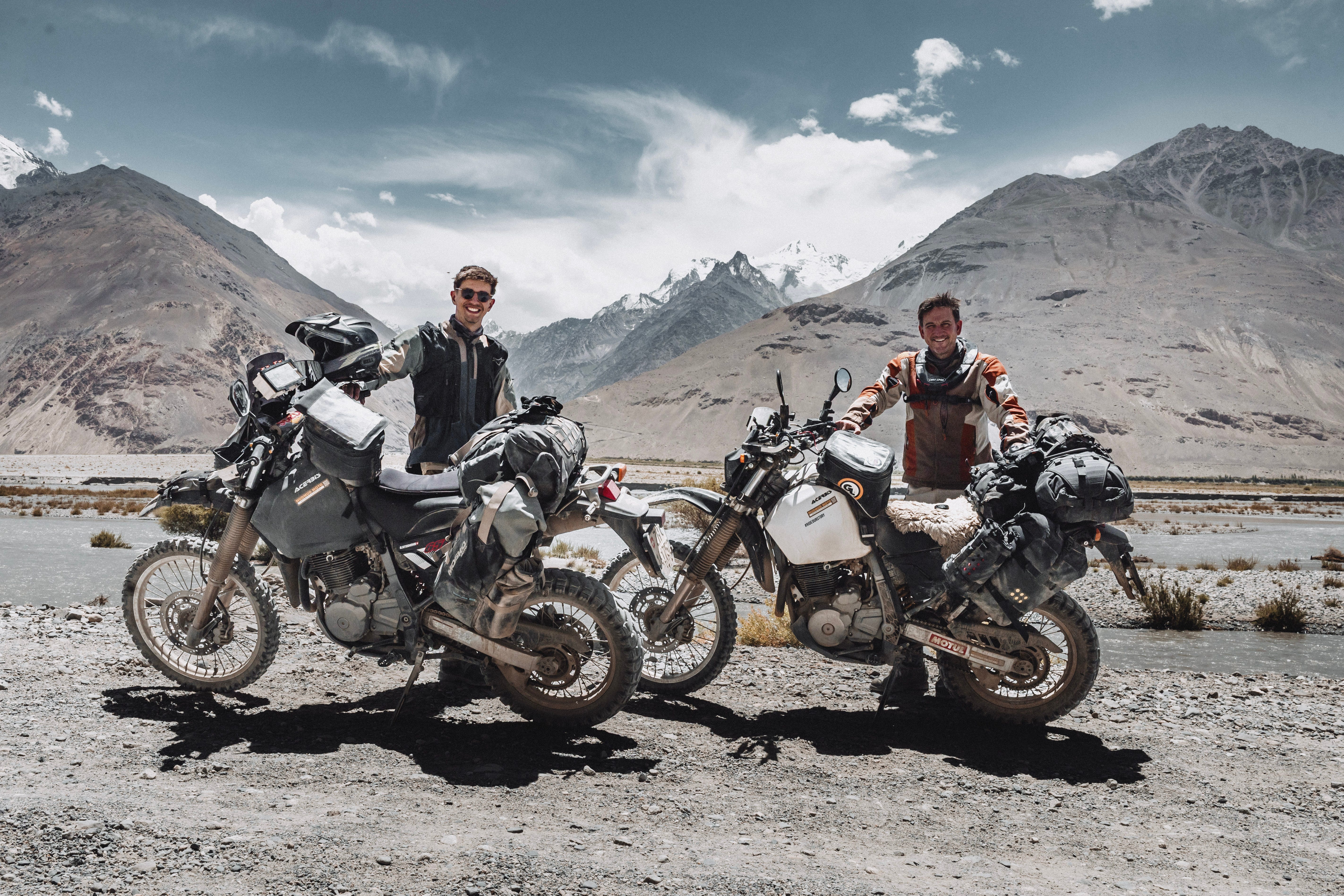
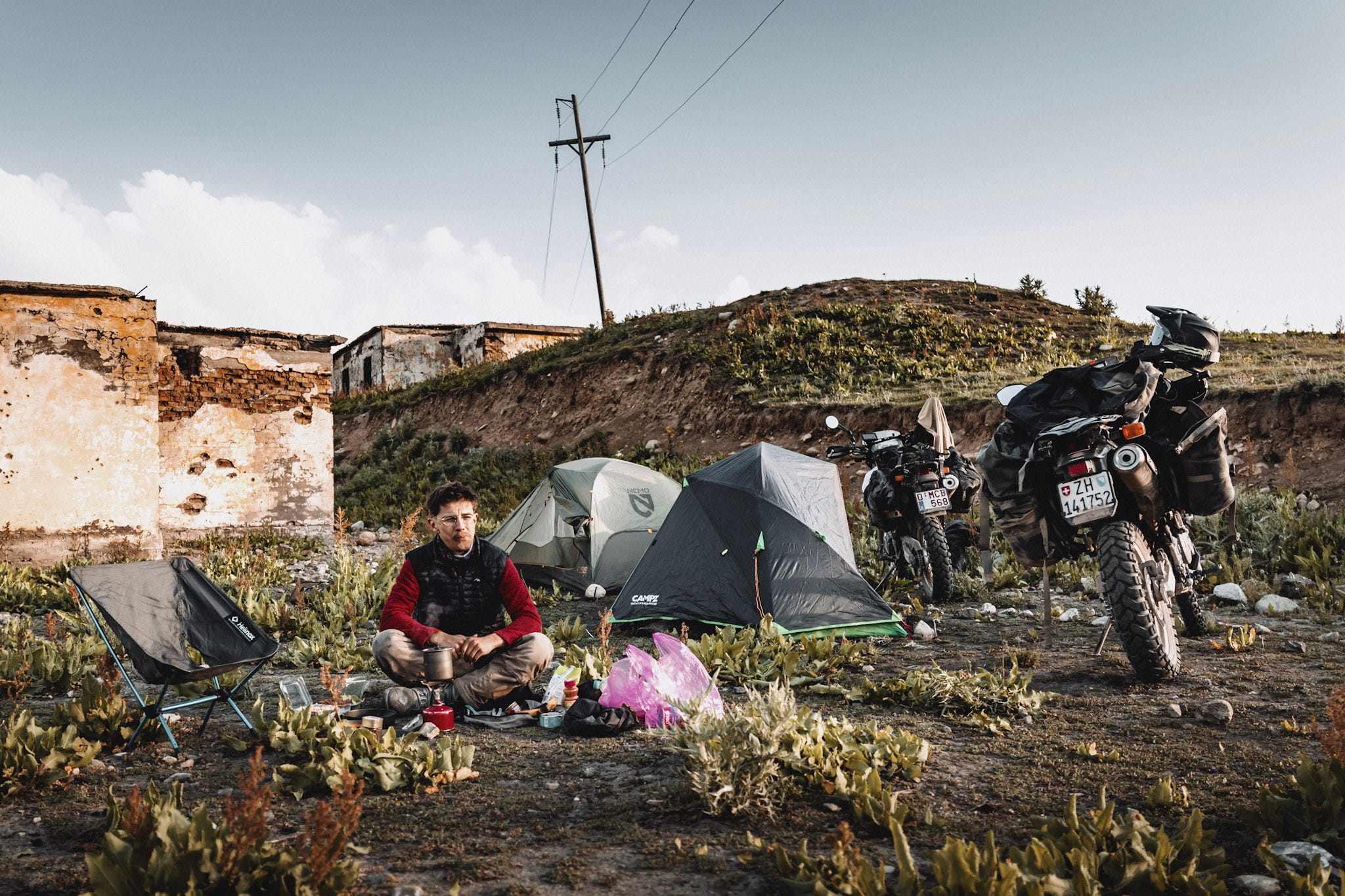
Kitchen: For the two of us we had one MSR pocket rocket burner and one small MSR pot (the 0.75L one), an MSR Skillet, 2 deep plates, a cup, a thermos to make tea, 2 forks, 2 spoons and 2 camp knives. That was it. We didn’t need any extra stuff and we didn’t need two burners. We often ate directly from the pot or skillet and it was more than fine.
Cleaning: Solid dish washing soap block inside a soap bar bag, a compact towel, and a small brush. The solid soap block was great. It lasts forever and can’t leak in your bags.
Bear Spray: Luckily, we never had to use it. They’re in a bit of a legal gray zone, but multiple officers and border guards asked us about it and didn’t seem to care. More important than bear spray though is to leave your food a couple hundred meters away from your camp when in bear zones.


Electronics
Charger
Small 65W, 3 port GAN charger and a 200W 6 port Anker charging station. I took out the small 65w charger for small coffee and lunch stops. I had it at all times in my tank bag. And I took the big 200W charger out when we slept at hotels. This meant I could connect everything overnight and be sure everything would be fully charged by the morning, without having to swap connections through the night.
Power bank:
Anker Powerbank 165 W 25000 mAh, with 70 cm integrated cables. I thought the integrated cables would be a bit of a gimmick but it actually made life easier not having to mess with extra cables inside the tank bag. Would recommend.
Cameras
No comment here as everyone has their own setup and preferences here. Make sure whatever you take is rugged enough to withstand the harsh, dusty conditions of where you’re going.
Computer
You really don’t need one unless you’re editing photos or making videos.
Gion: Macbook Pro M3. Overkill for most people, but I like to shoot and edit videos and I shoot in 4k.
Dad: M1 iPad Pro + Keyboard : Great for journaling and editing photos.
Cables and adapters: Bring spares, they will break.
Riding Gear & Protection
Your gear is your office and your living room. Protect the adventure. We both went for a layered system. There is no single best system out there. Try on as many as you can and take whichever one fits you best and feels most comfortable.
Jacket:
Gion: Alpinestars Techdura Jacket. It’s ok. There weirdly isn’t any CE abrasion rating, so because of that I cannot fully recommend it. I assume they did that to save costs. But the material seemed as rugged as any other rated jacket I have seen. I took this jacket specifically because it had removable sleeves which was amazing in the hotter weather as well as an integrated water bladder pocket. I also liked the many pockets. I had my passport, phone, wallet and bike papers on me at all times.
Dad: Klim Dakar Jacket. Similar philosophy to the Alpinestars: Designed for layered system and separate protection. It had an actual CE rating, but less pockets.
Pants:
Gion: Klim Switchback Cargo. These aren’t designed for long term adventure travel, but they did the trick great. They’re super comfy on the bike and around camp. I basically lived in them everyday except rest days. I liked to have moto pants that I can still wear around camp because you’ll be outside in the wilderness. The ruggedness of moto pants allows you to get on your knees to setup your tent, make a fire, sit down on the floor, etc. without being scared of ripping your pants over time. The only downside of these pants are that they’re quite warm and not very well ventilated, but I’m fine with that.
Dad: Klim Dakar pants for cold and mild weather, Klim Mojave pants for hot weather. Dad is quite sensitive to the heat, so he went with a 2 pair setup. These require your own knee protection. Dad used the Asterisk Carbon knee braces.
Rain Layer:
Goretex rain jacket/pants (Klim Forecast). Get something large enough that it fits above everything, yet compact enough that it feels comfortable around camp.
Base & Mid Layers:
Gion: Basic decathlon base layer (top and bottom). I only used them when it got very cold at night.
Dad: Klim Aggressor 1.0 long and short sleeve tshirts (3 total) and klim leggings. Worn daily under the armor.
Warm layer
Gion: Random no name, sleeveless puffer jacket bought in Turkey for 30 bucks. Did the job, but wasn’t very compact nor the warmest. I’d invest in a better one for next time.
Dad: Patagonia Nano Puff Jacket. Would recommend.
Upper Protection:
It’s hard to recommend anything here over something else. Try as many as you can and take the one that fits you best. We recommend level 2. Remember, you’re going on a long trip. You can recover from being sick and minor scratches within a couple of days, but a broken bone will send you back home
Gion: Fox Titan Sport Jacket. CE Level 2 everywhere. Did the job.
Dad: Alpinestars A-10. CE Level 2. Did the job.
Helmet & Vision:
Gion: Bell MX-9 ADV MIPS. Great affordable helmet. Have been using it for the past four years. It’s a bit noisy though.
Dad: Airo Commander 2 helmet, Scott Prospect Goggles.
Boots:
Get some good boots. Feet and ankles are the first thing that break, especially while riding offroad on a heavy bike with side bags. This will save your trip more than anything. We both used the Sidi Adventure 2 GTX boots and can recommend them.
Gloves:
Whatever feels good to you. I like lighter, more vented gloves and heated grips when it’s cold. Never felt the need for waterproof gloves.
Jersey:
Most of the time I also wore an MX Jersey just above the Armor. Is it necessary? Not really. Does it look cool? Heck yeah. We both used the Klim Mojave Jersey. It’s more rugged than a typical MX jersey and meant for these longer trips.
Extras:
Not gear per se but dad had a sheep skin on his seat to protect his butt. He swears by it. Defo recommended.


Personal Clothing & Hygiene
You don’t need a massive wardrobe.
Top:
Gion: 2 decathlon merino tshirts and a cheap decathlon polar fleece. I had never used merino before but I fell in love with it. Super light, barely stinks at all. I didn’t experience the scratchiness or discomfort many people get. And they were rugged enough to last the 4 months without getting any holes. I would swap the polar for a compact puffer next time.
Dad: Used the klim layers above as a daily tshirt. Didn’t need a polar as his Patagonia puffer did the job of keeping him warm.
Bottom:
Gion: Decathlon 2-in-1 trekking pants/shorts. The kind with a zipper down the middle to transform them from pants to shorts. Embrace the dorkiness, it saves a ton of space.
Dad: Mammut trekking pants, Mammut shorts
Underwear & Socks:
3 pairs of underwear, 3 pairs of moto socks, 1 extra pair of off bike socks. You don’t need more. Use merino to avoid the smell.
Shoes
You’re gonna want a pair of light walking shoes for those rest days and city exploration days. I used a pair of running shoes, but ideally I would use something more compact next time. They take up a lot of space.
Hygiene:
Compact towel
Wet wipes & toilet paper
Laundry wash leaves (never used them, there are laundry services everywhere)
Laundry cord (never used it)
Soap block (not the liquid stuff, a block lasts way longer)
Toothbrush and toothpaste (don’t get a compact set, you’re not saving any space)
Sunscreen: heaps
Medical: 1st Aid Kit (learn and study what is in it and how to use it. Keep it easily accessible) & personal medication.
Extra: Beanie, Neck gaiter (protects against both wind and sunburns on the bike), a fisher hat.


Motorcycle: Spares, Tools & Consumables
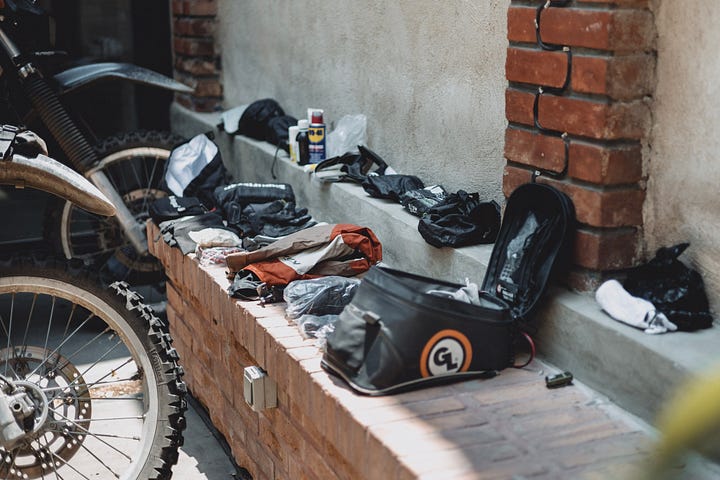
The DR650 is a tractor, but it’s not invincible. We kept our tools organized in an Enduristan toolbag and stored the spares in transparent dry bags so we could easily see what we had without unpacking everything.
Spares
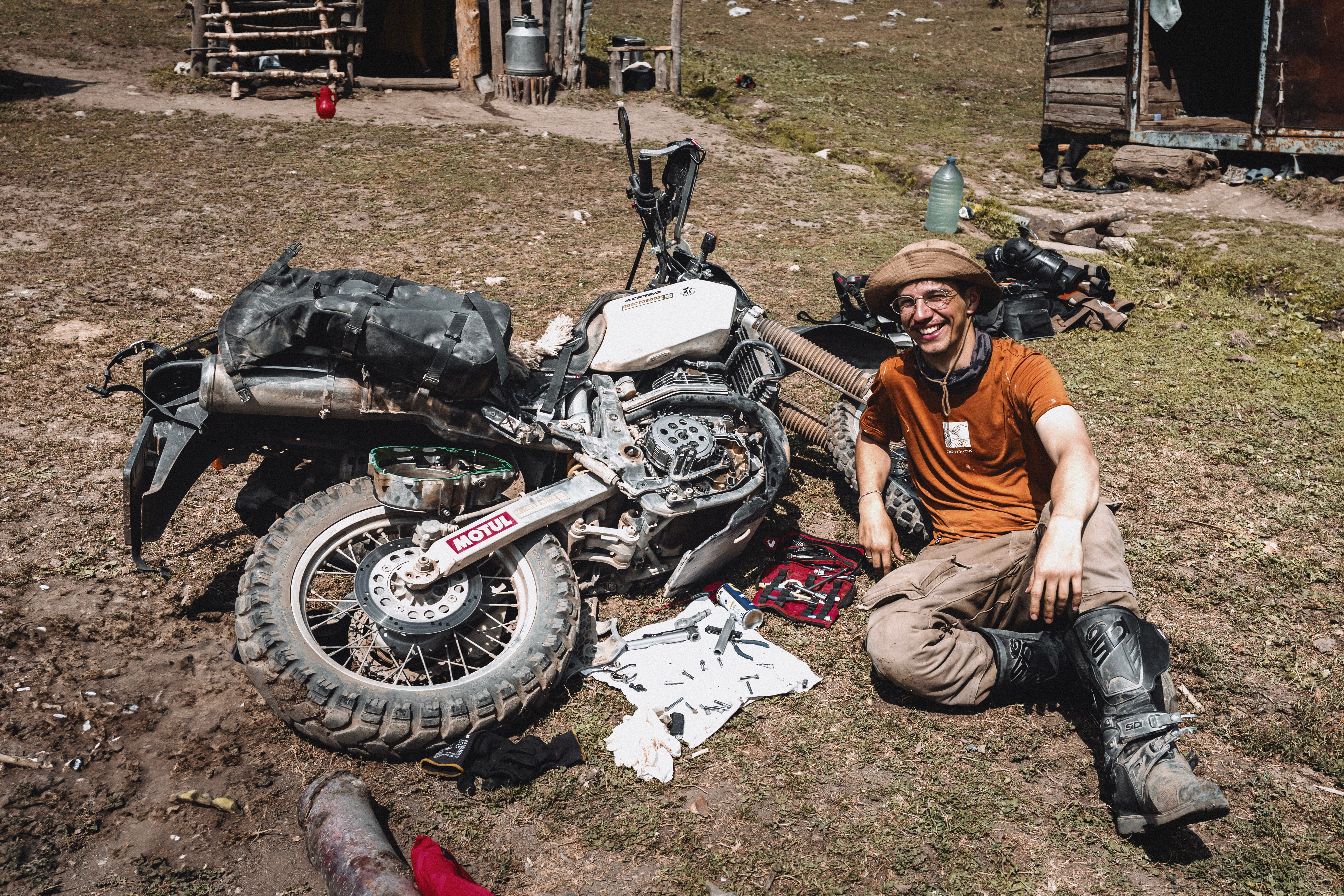
Tires: Dad started off with a Metzeler MC360 Mid Hard up front and a Motoz Tractionator Adventure in the rear. The rear did great, but the front was completely chewed up after 5,000km. After a service stop in Erzurum, we both switched to a Mitas E-07+ ENDURO TRAIL at the rear and a Mitas MC-23 ROCKRIDER at the front. I highly recommend this combo. The front saved us countless times in the deep sand of Afghanistan and handled surprisingly well on paved roads, even in the rain. The rear E-07+ isn’t the most aggressive off-road tire and struggles a bit in deep mud, but it easily survived the 12,000km stretch from Erzurum to Almaty and still has a couple thousand kilometers left in it.
Tubes: Heidenau Cross 3mm heavy-duty tubes (90/90-21 and 130/80-17) and rim strips. We also carried one standard reserve tube for both the front and rear. Common wisdom says you only need to carry a spare front (since a 21” tube can fit in a 17” rear in a pinch), but since there were two of us heading into incredibly remote areas with few shops, carrying the exact sizes gave us peace of mind.
Motor & Fuel: Four clutch plates, a length of fuel hose, inline fuel filters, and spark plugs. Do not skip the clutch plates. A burnt clutch can happen without warning, leaving you stranded in the mountains. Even if you manage to hitch a ride out, you’ll be waiting a month for replacement parts to ship to a place like Tajikistan.
Oil Filters & O-Rings: These are notoriously hard to find in Central Asia. You’ll probably end up stretching your oil change intervals out there, which the DR can handle, but swapping in a fresh filter when you finally do find oil will keep the engine happy.
Chain: Two DID 525 VX3 clip-style master links and a few spare 525 chain links.
Electrics & Controls: Ignition coil, pick-up coil, starter relay, multimeter, spare electrical wire, crimp connectors, replacement brake/clutch levers, a spare key, and a cable repair kit.
Cables: A complete spare clutch cable.
Suspension & Wheels: Spare fork seals, a SealMate (for cleaning dirt out of leaky seals), and a full set of front and rear wheel bearings and seals.
Helmet Spares: Extra visor screws, comms system glue patches, and plastic scratch remover for the visor.
Tools
Pro-tip: Keep track of exactly which tools you use when working on your bike at home. This ensures you don’t forget anything vital, and stops you from carrying dead weight.
Wrenches & Sockets: Standard metric sizes for the DR, a dedicated spark plug socket, and an 8” adjustable wrench.
Screwdrivers & Keys: Phillips, flathead, metric Hex/Allen keys, and Torx bits. Verify you have the exact sizes needed for your specific aftermarket accessories.
Motion Pro Combo Tire Iron/Axle Wrenches: These replace your heavy standard tire irons and bulky axle wrenches, saving a ton of space and weight.
Tire & Chain Tools: Trail stand, tire pressure gauge, Motion Pro valve stem tool, spare Schrader valves/caps, a compact electric tire pump, a patch kit (with fresh glue), and a Motion Pro trail chain tool.
Vise-Grips (Locking Pliers): Invaluable if you round off a bolt, strip a screw, or snap a shift lever and need a makeshift nub to shift with.
Utility: Tow strap and a compact lithium jump-starter battery.
Consumables & Cleaning
Fix-Its: Zip ties, JB Weld (or QuikSteel), superglue, Blue Loctite, Gorilla Tape, and electrical tape. You can practically rebuild half a motorcycle with just these items.
Fluids & Lubrication: WD-40, Liqui Moly grease, and a small bottle of motor oil for chain lube (applied with an old toothbrush). We also carried 1L petrol jerry cans for reserve fuel.
Hardware & Electrics: Spare fuses (10A, 20A), two fuel hose clamps, and a curated selection of metric nuts, bolts, and washers.
Cleaning: Scotch-Brite pads and a microfiber towel.
Miscellaneous
Water: We had an MSR 3L water bladder, I carried a camelback bladder inside my jacket (this kept me hydrated but also cooled me down when I poured a cold water from the fridge in there). Then we also always had a couple of extra plastic bottles bought from the store. We also carried some purification tablets but never had to use them.
Navigation: I used an old Android phone inside a custom 3D printed mount, dad used a Garmin Navi system. Neither was perfect. The phone overheated often, the screen wasn’t super bright and the charging wasn’t always reliable because of the bike’s vibrations. But it was great to have both very detailed OpenStreetMaps, Google Maps as well as the ability to easily download GPX tracks directly to it. The Garmin was great as a GPS on the road, but was inconvenient when needing a GPX, or when someone wanted to point us somewhere on the map. If I were solo, I’d go with a Phone again, or both. But not the Garmin alone.
Comms: We used Cardo comms. Good stuff. Don’t get the Slim version however. They’re inconvenient because you cannot detach the unit from the helmet, which means you have to bring your whole helmet to the charger, rather than just the detachable unit.
The Final Word: Just Go
Looking back at this list brings a flood of memories. Both the triumphs of having the exact right spare part in the middle of Afghanistan, and the comedy of carrying gear we never touched once in 15,000 kilometers.
The biggest takeaway I can offer is this: don’t let gear paralysis keep you in the garage. It is incredibly easy to spend months agonizing over the “perfect” setup, comparing ounces on a spreadsheet, and draining your bank account on the latest ultra-light titanium whatever. But as dad and I proved, a mix of second-hand bargains, a few strategic high-end investments, and a whole lot of zip-ties will get you across continents just fine.
Your clothes will get dirty, things will absolutely break, and you will definitely pack something stupid. That’s just part of the adventure. The gear will sort itself out on the road. What matters most is that you pack what you can, strap it down tight, and hit the starter button.
What does your adventure setup look like? Is there a weird luxury item you absolutely swear by (like dad and his sheepskin x chair combo), or a specific piece of gear from our list you want a deeper review on? Drop a comment below. Let’s talk about it.
Ride safe, and embrace the imperfect prep.
Great info. Love that last paragraph