


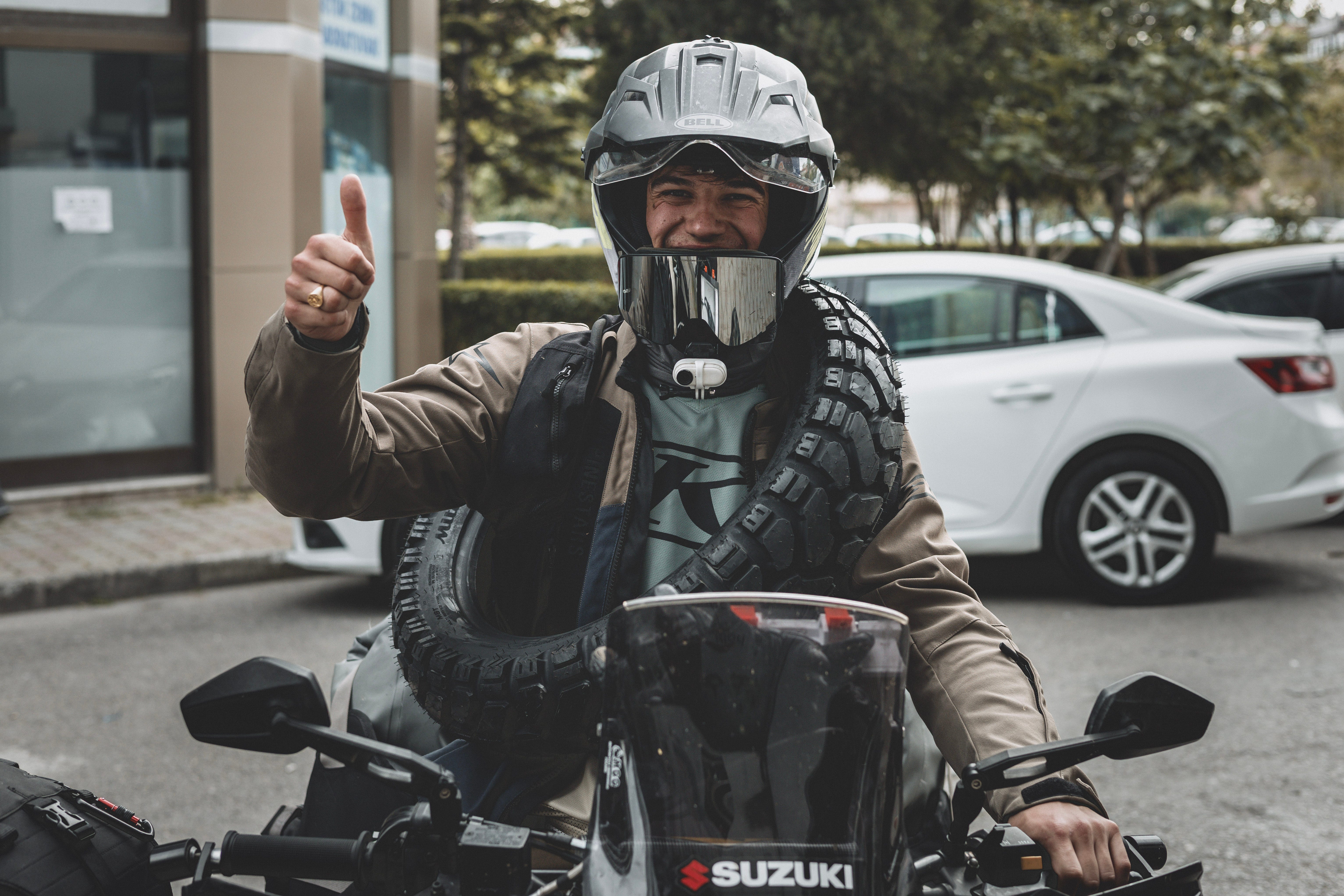
Before dad and I spent 100 days riding 15,000 kilometers from Europe to Kazakhstan, the preparation phase almost felt like a full-time job. I remember watching Long Way Round where Ewan, Charley and their team took months to prepare their adventure and thinking “no way you need that long to prep, just go!”. And yet here I was watching my 50th motorcycle jacket review and searching reddit for cheap amazon wool socks reviews.
If you’re like me, you’ll often get lost in the sauce to the point where you don’t even realize you’re in it, rather than just taking an executive decision. This cost me personally 2-3 weeks of my own trip, as I procrastinated clicking the buy button for the gear in my shopping cart. Suddenly you’ll start wondering if you need a €20,000 adventure bike and a satellite phone just to cross a border. Additionally to pure procrastination, staring at a map in your living room, with the sheer scale of the logistics, visas, spare parts, gear, routes, can feel paralyzing.
But it doesn’t have to be like that.
After actually doing it, we realized that long-term motorcycle travel is a lot less about having the perfect gear and a lot more about having the right mindset, a couple of zip ties and just a bit of mandatory due diligence. With the experience we gained I feel like I could honestly just leave tomorrow and ride anywhere, with no prep really needed (except some paperwork, more on that below). So I wanted to share with you that knowledge, to hopefully relieve some of that procrastination, anxiety, or whatever is blocking you from simply going. Once/if you have all of these done, don’t wait a minute, adventure awaits!
1. The Best Bike is the bike you already have
The second best is the bike your heart wants.
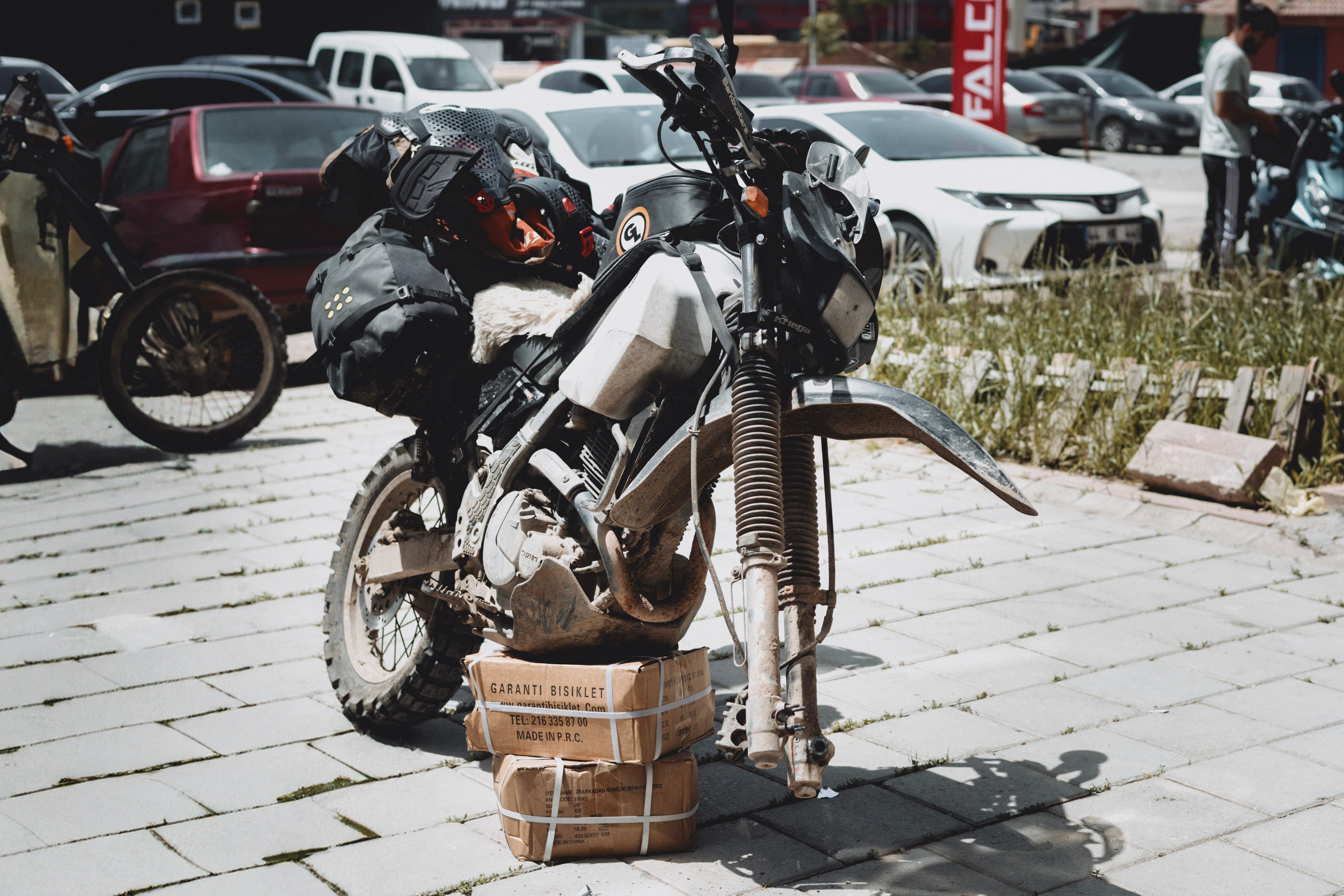
We spent years wondering about the “perfect” world-tour machine, deep-diving into forums, watching endless reviews, and eventually settling on the mighty old Suzuki DR650. It was the rational choice. The one that made sense on paper.
But very quickly, we realized something: we honestly could’ve made the exact same journey on almost anything. We watched Afghan locals on battered Chinese 125s absolutely shredding through the most technical terrain we encountered, and we’ve seen countless different bikes on the road from the big BMW GSAs to the small cheapest-bike-on-motoscout 2001 Kawasaki ER-5. Heck, we even saw a bunch of madmen crossing the continent on those strange, human-powered machines they call “bicycles.” The truth is, any bike can make it through most terrain. And if you’re the Pol Tarrés kind of rider, you can probably do backflips on whatever you’re currently riding and you probably have the most kitted out bike on earth already anyway.
It is incredibly easy to forget that motorcycling is, at its core, a passion. It’s supposed to be fun. Not hyper optimized. You’re not competing in anything. Stop watching your 1000th Ténéré 700 vs. [insert bike here] comparison video. If you prefer the look and vibe of the Ducati DesertX over the T7 (and can afford it), but are hesitating because the T7 is 10% better off-road, then just get the DesertX. Trust me, you’re the limiting factor, not the bike.
Don’t default to the best bike on paper. Go with the bike that speaks to your heart. You’ll make it to your destination either way, because remember, the road is the destination. In fact, dad is already plotting to take his old 70s BMW Airhead to Magadan via the Road of Bones, and I can’t wait to take my 1991 Transalp through the Balkans. Two completely subpar bikes for the job, but two bikes we absolutely love.
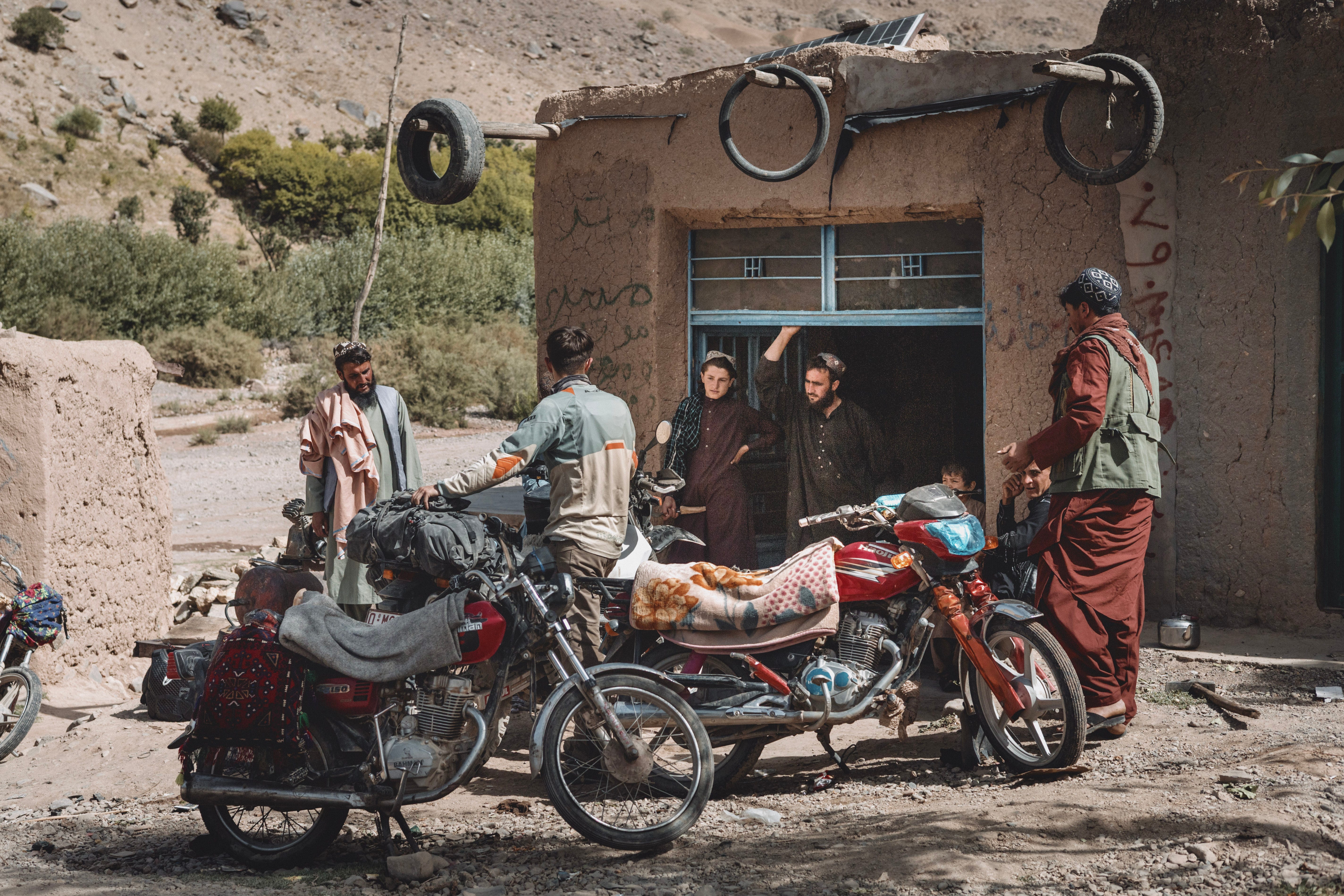
2. Less is More
Pack light. You do not need four t-shirts; you need two. You don’t need two pairs of casual pants; you just need your riding gear and one pair of lightweight hiking pants for off-the-bike use. Pro tip: get the incredibly uncool ones with the zippers that transform them into shorts so you don’t have to pack a separate pair.
You don’t need seven pairs of underwear; three will do fine.
You don’t need two pans, two pots, and a full dining set. For the two of us, we carried one single pan, one single pot, one single plate/bowl hybrid, one single burner, two forks, two spoons and two pocket knives. It was all we needed.
Packing light isn’t just about reducing the raw weight on your subframe. While the physics matter, the real benefit is the lightness of mind it brings.
Every single item you pack is an item you have to manage, clean, secure, and worry about. When you pack heavy, you are carrying a massive cognitive load. But when you strip your gear down to the absolute essentials, that mental weight disappears.
You always know exactly what you have, at all times and where it is. You never have to second guess if you left something behind in a hostel room. Packing up your stuff in the morning takes 5 minutes. You aren’t forced to play a game of Tetris just to get your bags closed. Unpacking and repacking at border checks isn’t that much of a hassle anymore.
Ultimately, overpacking is driven by the "What If" fallacy. We pack out of fear of the unknown. What if I need a third layer? What if I need this specific tool? What if I want to dress nice for a restaurant? Minimalism is simply the act of trading that fear for trust. You trust that if a rare "what if" scenario actually happens, you will figure it out. You’ll buy a cheap sweater at a local bazaar, you’ll borrow a wrench from a village mechanic, or you’ll just eat your dinner in your uncool pants like the traveler you are.
The Two Exceptions to the “Less is More” Rule:
Bike-Specific Spares: Always bring the parts that are notoriously hard to find for your specific machine (eg., clutch plates, spark plugs, specific oil filters). Waiting weeks for a DHL package to arrive in rural Tajikistan sucks.
A Camp Chair: Dad brought a super light, compact Helinox-style folding chair, and I stubbornly did not. I was initially too snobbish about it, adhering to my minimalist ethos. But seeing him recline in his chair at the end of a 10-hour riding day, beer in hand, watching the sunset, while I had to choose between sitting upright or awkward side-lying in the dirt, got me insanely jealous. It’s the one piece of luxury I have officially been converted to.
Note: We don’t have a full packing list drawn up just yet, but I’ll write one eventually. Stay tuned.
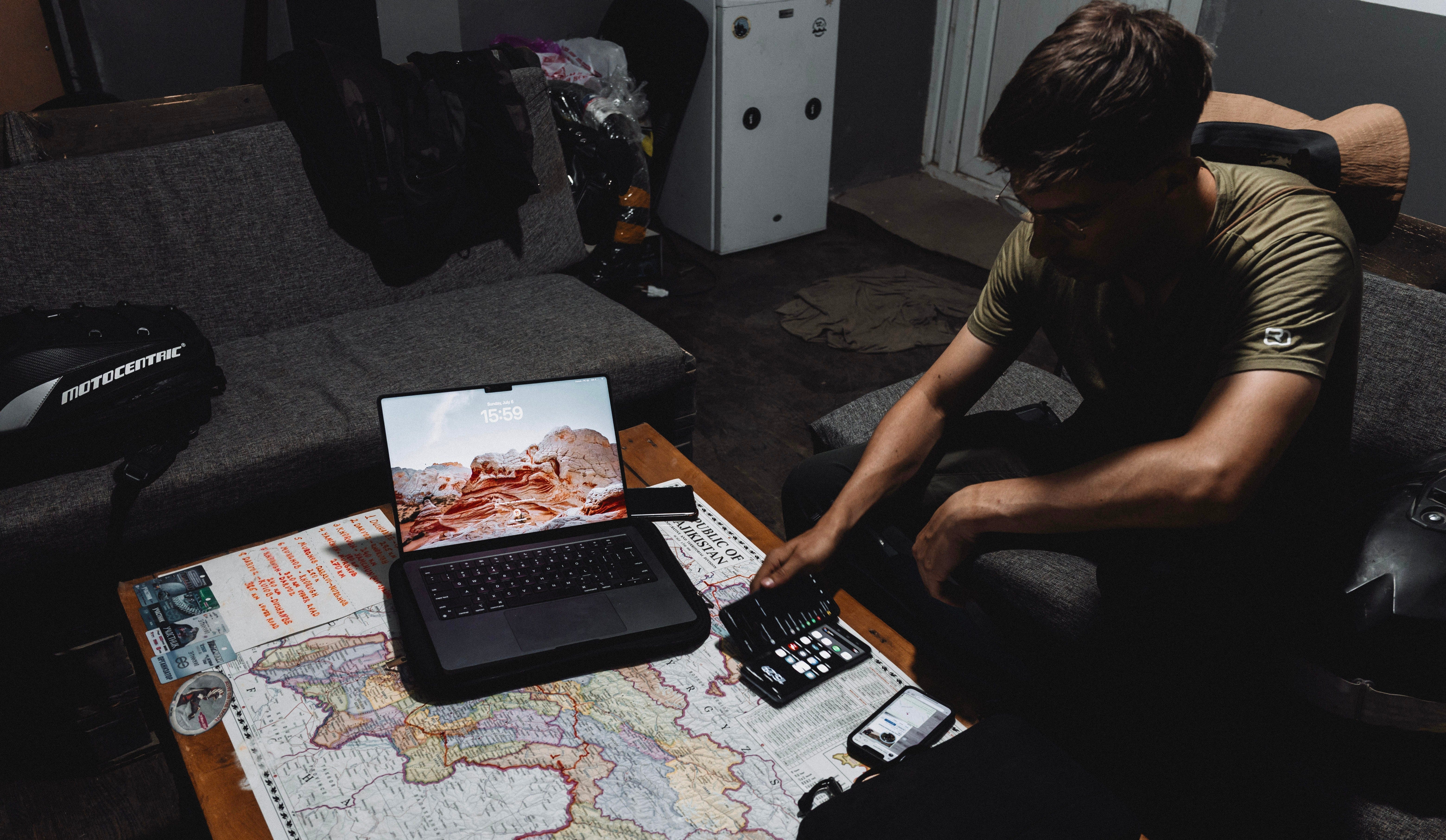
3. Don’t Over-Plan Your Route
Unplanned things will happen.
Instead of a day-by-day itinerary, break your trip down into manageable “legs”, each roughly two weeks to a month long, anchored by a starting and ending city. Then, make a list of Points of Interest you’d like to see along the way, but leave the daily routing open. You’ll set your destination for the next day as the trip unfolds.
Why this approach works:
Timing & Visas: If you have a hard end date for your trip, this keeps you somewhat on track. More importantly, it ensures you actually arrive at borders on time for visas that have strict entry dates. Having a mid term destination helps you get on the bike on those days you just don’t want to.
Logistics: It helps you plan the big maintenance tasks in advance. Once you know you’ll be in Tbilisi in 8 weeks, you can order a fresh set of tires to a local shop, or even organize a weekend for friends to fly in and visit.
You effectively get the best of both worlds: the freedom and adventure you wanted, with the safety net of knowing you’re always in reach of a logistical hub.
Additionally, it’s also nice to have tracks like the TET downloaded for those days when you just don’t feel like playing explorer and want a guaranteed good route. In other places like the infamous Afghan Central Route or the Pamir Highway, there is only one road anyway.
But for the rest of the world, remember why you’re doing this: for the absolute freedom that motorbikes offer. Take advantage of it!
4. Dress to Protect the Adventure
Your riding gear is going to be your office, your living room, and your primary shelter for the next few months. If you have the budget to splurge anywhere, do it here. You’ll be spending most of your waking hours in the exact same pants, jacket, helmet, and boots, so make sure they are comfortable and up to the task. And beyond comfort, be well protected. Do not cheap out here or convince yourself you don’t need those stiff, expensive adventure boots or CE Level 2 pads.
Yes, good gear is about saving your life. But on a more practical level for a long-term traveler, it’s about protecting your trip. A broken arm or a shattered ankle probably won’t kill you, but it will keep you off the bike for months and send you on a miserable flight home. You want to avoid that at all costs.
When you ride for hours and hours, every single day, two very dangerous things happen:
You get deeply fatigued.
You get cocky.
Both of these lead to an increased risk of stupid, totally avoidable accidents. That’s just a fact of long-term travel. Furthermore, you might be the best, most attentive rider on earth who never makes a mistake, but the biggest danger will always be the other people on the road and you have zero control over them.
Bottom line: Anything that stops a minor tip-over or a high-speed slide from becoming a broken bone is a massive win.
5. Set a Budget
Everyone’s travel fund looks different, but it is absolutely crucial to have a set monthly allowance.
If you want a real-world baseline of how did it, check out the financial breakdown I wrote to see how we averaged roughly €700-800/month:

A budget is your best defense against on-the-road finances anxiety. Without one, you’ll likely start your adventure full of financial carelessness (which translates to pure joy in the moment) only to end up miserable, stressed, and counting pennies by month three. Having a set budget allows you to pace your splurges across the entire trip, giving you the confidence and peace of mind to know exactly how long you can sustain your adventure.
6. Cash is King, Redundancy is Key
Disclaimer: Our experience here is mostly based on the route from Bulgaria to Kazakhstan. Your mileage may vary in other regions of the world, but the underlying principles are universal.
We brought mostly US dollars, which obviously was necessary in places where cards are either heavily sanctioned (like Iran and Afghanistan) or where payment machines simply don’t exist, which is most places outside of cities. We brought Euros too, but most of the time USD were more welcome at exchange offices.
Here are some rules for travel cash:
Bring crisp, new $100 bills: Many places in Central Asia straight-up refused to exchange smaller denominations or bills with creases and tears. If they did accept folded bills, they hit us with a hefty exchange fee. Keep your dollars flat and pristine. Also, I falsely assumed that bringing a stash of $1 bills would help me pay for small things and get me out of tricky situations. That might have been true 10 years ago, but most of Central Asia now only accepts payment in local currency (even Afghanistan!).
Exchanging cash is cheaper than ATMs: Even if your Revolut or Wise card has zero foreign transaction fees, the local bank that owns the ATM will often charge you a withdrawal fee anyway. Those sometimes go up to 15%!
“Black Market” exchanges: Don’t be afraid of exchanging on the street rather than in official exchange offices. Street exchangers sometimes have better rates/fees than the official ones. Just ask the locals or any hostel receptionist where they exchange. It is standard practice in some countries to exchange from their local volatile currency to a more stable one like the USD for savings, and these street exchanges handle a big part of that business. Watch out for scams though.
Redundancy: Carry at least two different bank cards and stash them in separate bags. Do the same with your cash: distribute it across your luggage. If one bag gets lost, your trip doesn’t end. Also, VISA is far more widely accepted globally than Mastercard. If I had to choose, I’d take two VISAs rather than one of each. A mix of two VISAs and one Mastercard is probably the ultimate sweet spot.
Bonus: Paying in cash makes it way easier to physically feel and track your monthly budget than mindlessly swiping a card.
7. The Community is your Best Friend (and Worst Enemy)
The motorcycle community is incredible for getting you out of trouble when you’re stuck or need a second opinion. But it also sometimes sucks, frankly, because of all the pseudo-experts out there. For any question you ask, you’ll get 1000 different answers from 1000 different schools of thought. It can leave you with more questions than you started with.
The takeaway? Take every piece of advice with a grain of salt. Try out whatever sounds most logical to you and see if it works. Remember, you are on an adventure. The obstacle is the way. That’s the beauty of long-term travel: it’s not like a one-week vacation where every hour has to be optimized so you don’t “waste” precious time. You have time to figure it out, so enjoy the ride.
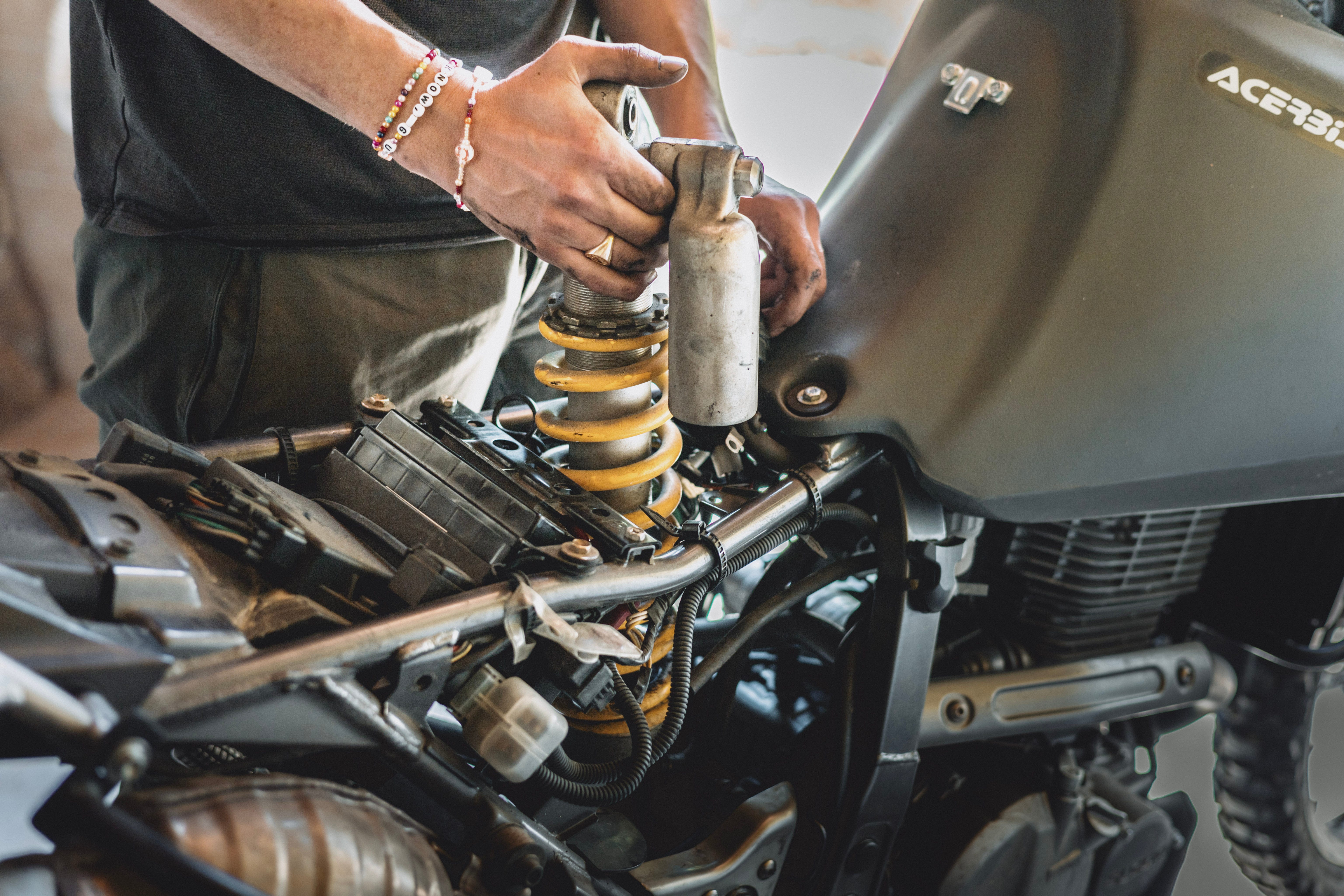
Also, learn to ignore the negativity of these Facebook groups and forums. When I first left on my trip, I realized on day 2 that I had a faulty rear shock. I reached out on forums asking how to fix it, and the comments flooded in: “Why would you leave on such a big trip without checking your rear shock?? Are you dumb?” No, I’m not dumb! I simply didn’t know. I live in an apartment with no garage or workshop space, and I didn’t have the budget to pay a mechanic for a full pre-trip inspection. So no, I didn’t have the capacity to do a full rear shock inspection before leaving. Should that stop me from going on an adventure? NO! I took this faulty shock as part of the adventure, figured it out on the road, and then kept riding.
8. The Paperwork Hustle (Start Early)
Let’s be completely honest for a second. Everything else on this list? Negotiable. You can leave tomorrow with the wrong tires, a leaky tent, a subpar bike, and zero route planned, and you will figure it out on the fly. It might cause you some inconvenience or temporary discomfort, but it won’t stop you.
Paperwork is the only absolute, non-negotiable, hard stop to your adventure.
Border guards do not care about your “free spirit” mindset or how far you’ve ridden. If you show up to a crossing without the right piece of paper, the gate simply does not open. Screwing this up is a literal showstopper. It is the boring, unsexy part of adventure travel, but it is the one thing you absolutely must prep in advance.
Here are the big three:
Visas: While many countries offer easy e-visas or visa-on-arrival nowadays, many others require you to apply weeks or even months in advance. Some require you to apply from your home country, while others require specific travel agencies to sponsor you. Know exactly which borders have strict entry requirements and plan your timeline around them.
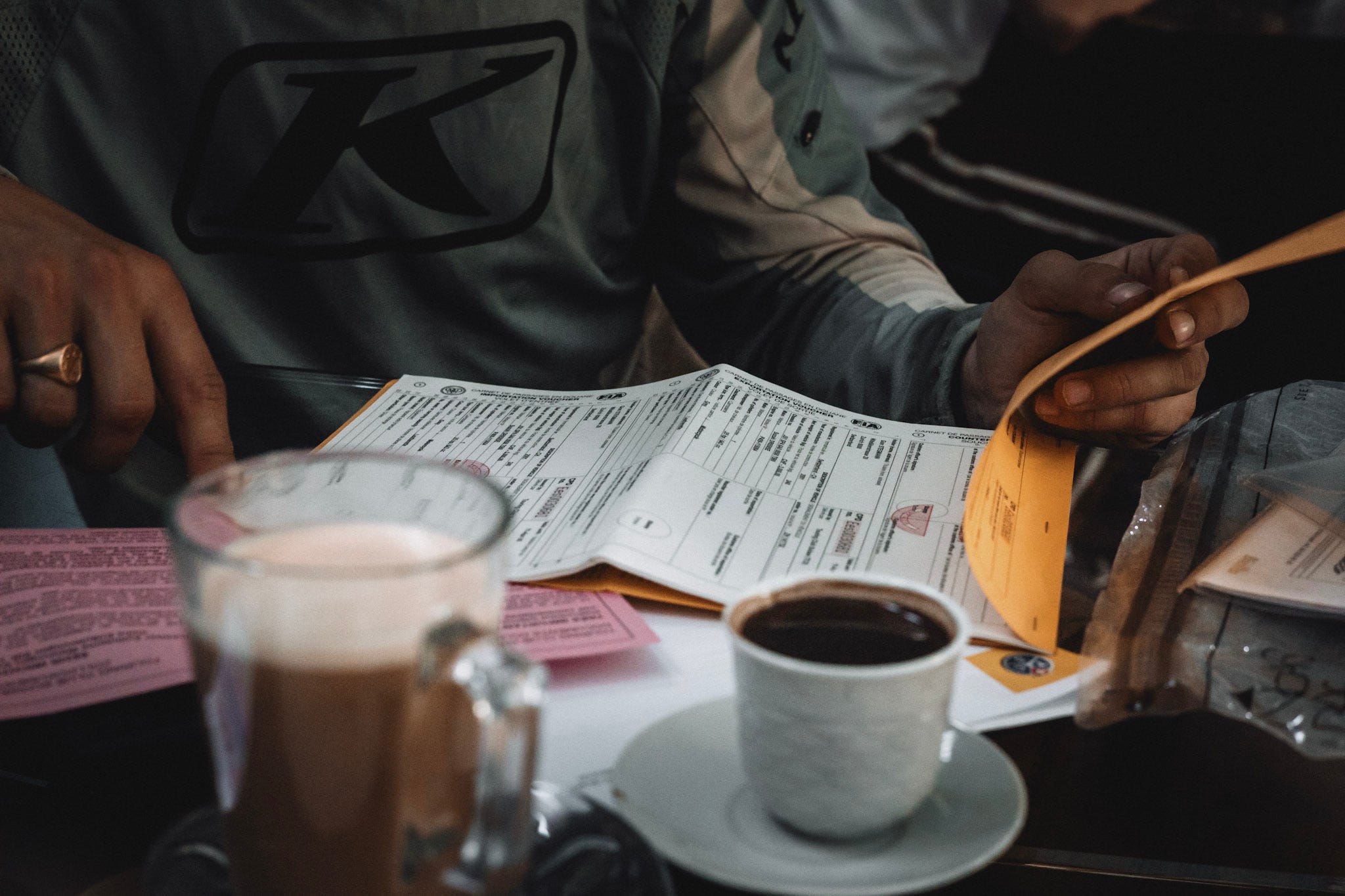
The Carnet de Passage en Douane (CPD): Most countries don’t need this but some do (eg., Iran, Egypt) and will not let your vehicle in without one. Think of this as the passport for your motorcycle. It proves to customs officials that you aren’t going to illegally import and sell your bike in their country. Getting one requires a hefty deposit and processing time through your local automobile club.
Local Vehicle Insurance: You will often have to buy local third-party liability insurance at every new border once you exit Europe. It’s mostly cheap and easy, but make sure you stay informed of what you need in each country.
Other paperwork you should get sorted before you leave:
Travel/Health insurance: These policies come in many different forms: some cover only your medical bills, while others cover medical repatriation and will even ship your broken bike back home. Whatever you get, make sure it’s a policy that can actually get you (and your bike) out of deep trouble. Knowing help can come get you if things go entirely sideways is priceless, and if you ever need it, it will pay for itself a hundred times over.
International Driver’s Licence: This is essentially just a glorified, multi-language translation of your home license, but corrupt cops and border guards love it. Note: An IDP is legally useless on its own. You must carry your actual, physical domestic driver's license right alongside it.
Original Vehicle Registration (Title / Carte Grise): Do not bring only a photocopy of this, and do not try to cross a border with a bike registered in your friend’s name unless you have a heavily notarized, officially translated power of attorney (and even then, it's a massive headache). You need the original document, in your name.
Passport Validity & Blank Pages: People forget this one all the time. Almost every country requires your passport to be valid for at least 6 months after your intended date of departure. Furthermore, a long trip across many countries might eat up your passport pages fast between full-page visas and entry/exit stamps. Make sure you have plenty of completely blank pages left before you set off.
Pro Tip: Border officials love paper. Make multiple physical copies of your passport, driver’s license, international driving permit, vehicle registration, and your vehicle’s title. Stash them in different bags. Handing over a photocopy is always better than handing over your actual, irreplaceable passport to a corrupt official.
9. The Mighty To-do List
You’re almost ready to leave but still need one final sanity check. Fall back on a trick as old as time: the mighty to-do list. By splitting the prep into distinct buckets, the mountain of logistics suddenly turns into a series of very manageable, bite-sized tasks. Divide and Conquer. Open up whatever todo list solution you use (an app, Apple Notes, or pen and paper) and set up exactly these lists. Check them off one by one, and before you know it, your driveway is in the rearview mirror.:
One Bike Prep List: (e.g., oil change, mount new tires, check chain)
One Gear Prep List: Things you wear, sleep in, or use. (e.g., buy and test tent, pack tools, find merino socks)
One List Per Country: The bureaucratic checkpoints. Make a mini-list for each specific country on your route. (e.g., Tajikistan border permit, Iran visa and CDP, download offline maps for Turkey).
One General List: For stuff that doesn’t fit above (e.g., getting travel insurance, canceling your home internet, buying a power bank)
10. The Mental Prep
Remember: at some point, you have to stop preparing and actually do the thing.
I mentioned earlier that I lost weeks of my own trip just procrastinating over minor details. I was paralyzed by the illusion that there was a “perfect” way to prepare, constantly reading one more review, checking one more forum, or staring at a route map until my eyes blurred.
Here is the ultimate mental hack for trip prep: just make an executive decision and move on. Stop wasting precious mental energy over-analyzing a piece of gear when a big adventure is waiting for you. Take action. If you’re stuck on a detail, pick an option, close the laptop, and trust that you’ll figure the rest out and adapt on the road.
The small optimization you lose 2 weeks debating on now, is overshadowed 1000x by the experiences you’ll have everyday on the road, so don’t overthink it too much. The anxiety of the unknown is always worse from the comfort of your couch. But the moment you finally drop the clutch and pull out of your driveway, something magical happens: everything just flattens out.
The overwhelming monster of a trans-continental expedition simply shrinks down into your new, very manageable daily routine. You wake up. You ride. You find food. You find a place to sleep. You fix whatever minor thing broke that day. You have a beer. Repeat.
You will get tired. You will get lost. You will drop the bike. But that isn’t a ruined plan, that is the adventure. The obstacle is the way.
Cheers Tony! Appreciate the kind words. No plans yet, but my DR is still parked in Kyrgyzstan, so I'm only ever a plane ticket away from adventure The Transalp needs some TLC too before it can hit the road
Great article Gion! I had to laugh at a few things - mirrored exactly most of the things I did too. A MUST read for any aspiring overlander. When’re you heading off again?