


After 100 days on the road, crossing more than ten countries from Belgium to Kazakhstan and riding roughly 15,000 kilometers, dad and I had a good sense of what this kind of trip actually costs.
When you’re dreaming it up, everything feels abstract: gas, food, visas, repairs… they all sound small on their own, but somehow they add up. So we decided to share our numbers. Not to say “this is what it costs,” but rather “this is what it cost us.”
All numbers below are per person, even though we were two traveling, father and son, each on our own bike. Being two helped a bit here and there (splitting a loaf of bread, sharing a cooking pot, hotel rooms costs often being per room rather than per person), but most expenses remained individual. The prices are what I can recall — estimates, not audits — but they should give a solid idea of what you’d spend on a similar route. For context, we’re Swiss nationals living between Belgium and Switzerland, and the trip took place between May and August 2025.
TL;DR 💸
We spent around €750–850 per month per person, all included (except pre-trip costs like gear or documents).
According to Tricount, where we tracked expenses, we averaged €766/month, though that’s likely a bit low since we probably forgot a few things. Treat this as a good estimate, not an exact science.
Sleeping 🛏️


At the start, we had a plan: camp for three nights, then treat ourselves to a hostel for a day or two. On paper, it sounded great — riding through mountains, pitching our tent under the stars, then enjoying the pleasures of modern life: AC, kinda hot water, and somewhat clean sheets. A chance to catch up on blog posts, editing, and some Wi-Fi goodness. In reality, it didn’t quite hold up.
We slept for free about 40% of the time. That is, camping or being hosted by locals.
It wasn’t that we got lazy or soft. When we’re on motorcycles, both of us actually prefer camping when we can. It takes about fifteen minutes to set up camp, and after that, we get an amazing evening in nature. Going to a hotel, on the other hand, means finding one first, negotiating the price, checking if the parking is safe for the bikes, hauling our gear up from the street to the room, and then convincing ourselves that yes, we might as well do a quick laundry run while we’re at it. Sometimes, though, camping just didn’t make sense.
In Iran, for instance, a lot of what’s worth seeing is in the cities. We’d roll into Tabriz or Tehran after a long day on the road, and by then, the last thing we wanted was to ride another hour or two just to find a quiet field to sleep in. We’d rather stay close, in a small hostel with a shower, a roof, and maybe even Wi-Fi that half-worked, and spend the next day exploring mosques, tea houses, or just resting. Being in the country as the 12-day war unfolded also meant camping was a no-go. Though one night, on the road between Tehran and Mashhad, we did get invited to sleep at a local family’s place. One of those spontaneous moments that remind you why you travel in the first place.
Afghanistan was another story altogether. We spent about ten days there, and camping was simply not an option. Too many stories of travelers being “invited” by the Taliban to pack up their tents and sleep under supervision, which, in Afghan terms, means you’re not sleeping outside tonight. After days of rough roads and dust, we didn’t need more adventure than that. Guest houses and hotels were the only choice, as low quality and expensive as they were.
Other times, it was nature itself that made the call. Like the high-altitude plateaus of Song Kul in Kyrgyzstan or the town of Murghab in Tajikistan, where we spent three nights waiting for the weather to clear. We could have ridden on and “not wasted” those days, but we didn’t ride 10,000 km to do the Pamir Highway and Ak-Baital Pass just to see grey clouds. If we wanted fog, we’d have stayed in Belgium.
Either way, when we did pay for accommodation, it was rarely expensive. We feel at ease in hostels and shared dormitories. Throughout the trip, we averaged around €10 a night, often including breakfast: bread, eggs, tea, maybe a bit of cucumber. It was rare to pay more than €20, even in bigger towns. The exceptions were Turkey and Afghanistan, where prices crept closer to €15–20 per night.
Looking back, the mix felt right. The nights spent camping in silence, surrounded by the hum of insects, the faraway bark of a dog, or the too-close buzz of a mosquito, balanced out the hostel nights filled with travelers’ chatter, the clink of tea glasses, and the faint buzz of the AC unit.
If I did it again, I’d expect a similar balance, but I wouldn’t plan for one. If I feel like a hotel, I’ll take it. If I feel like camping, I’ll camp.
Food 🍔🌭🥦
We like to eat simply, we rarely went to a fancy restaurant and sticked to small local restaurants, small snack bars, or roadside cafés. Most days we had two meals out and a couple of teas or coffees.
Typical prices:
Turkey, caucasus and Iran: €4–5 for a full plate (meat, rice, salad, bread, ayran)
Central Asia: about €3 for a rice-and-meat dish
Add coffee, pastries, and the occasional beer in bigger cities.
When camping, we cooked ourselves: simple meals like rice + tomato paste + tuna, costing about €2-3/meal.
All in all we averaged around €8/day. If you’re on a tighter budget, you could definitely cut food costs even further.


Transport 🏍️💨
Fuel was one of our biggest, but also most predictable, expenses.
We each spent roughly €700 total for the entire trip — give or take (€600–800 is a fair prediction). Our old Suzuki DR650s averaged about 5L per 100 km (roughly 47 mpg), and across most countries, fuel cost less than €1 per litre. It was even (almost) free in Iran!
Other regular motorcycle costs looked like this:
Engine oil: around €50 per month
Repairs at local mechanics: €50–100 per month
New tires: about €250 per pair
Once you leave Europe, mechanics become very affordable, and most workshops are happy to help travelers. Whenever we were near a town and had an issue, we’d stop and let the pros handle it — but we also carried tools, spare parts, and enough know-how to do our own repairs when needed (which happened more than once, usually somewhere remote).
We covered about 5,000 km per month, meaning fuel and maintenance easily made up roughly one-third of our total expenses.
If you’re doing a similar route on a bicycle or hitchhiking, you can expect your budget to shrink dramatically. This is the part of our spending that’s hardest to avoid with an engine.
(For local taxis, buses, or city rides, check the Miscellaneous section below.)


Miscellaneous 🤷♂️
All the small extras — entrance fees, hammams, taxis, sunscreen, gas canisters — stayed under €50–100/month on average.
SIM & Connectivity 📶
We mostly used local SIM cards, which cost around €10/month and only took 20 minutes to buy at a local shop.
Only in Turkey did we switch to eSIMs, since local SIMs were expensive for foreigners.
Pro tip: always buy SIMs in small convenience or phone shops rather than at airports — you’ll save a lot and avoid tourist markups.
Laundry 🧺
We usually did laundry at hostels, for about €1–2 per load, once or twice a week. It was cheap, easy, and a good excuse to take a break while waiting for it to dry.
City Transport 🚕
We mostly got around town using taxis when exploring cities. It cost us less than €5 per day, and being two people meant we could split the fare.
We could’ve used public transport, but since we rarely stayed more than a few days in each city, we preferred saving time over a couple euros.
Cash & ATMs 💵
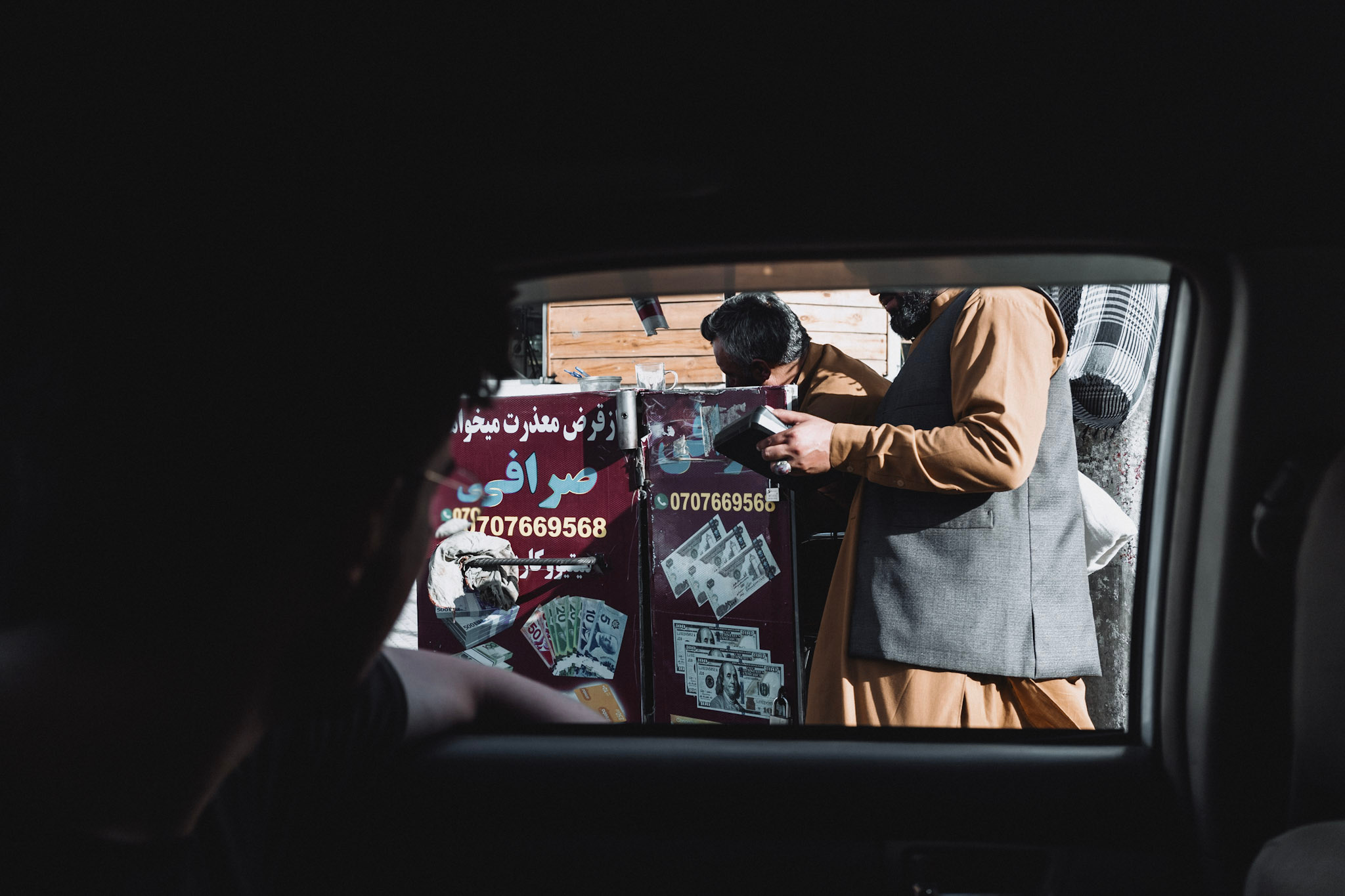
We started the trip with about $2,000 USD each in cash, which we exchanged along the way. Cash exchanges were almost always cheaper (and more negotiable) than ATM withdrawals, which often came with high foreign transaction fees.
We paid by card whenever possible, Revolut worked great but make sure you have a couple of alternatives or some cash in case it’s refused.
In Iran and Afghanistan, card payments were impossible, but elsewhere, VISA cards were widely accepted (far more than Mastercard).
And surprisingly, we never had to pay a bribe the entire trip. We had one close call in Kyrgyzstan, but managed to talk our way out of it.
Pre-Trip Costs
Documents & Visas 📄
Iran Carnet de Passage: €300
Iran visa: €100
Afghanistan visa + vehicle permit: €150
Regional permits (Afghanistan/Tajikistan GBAO): ~€100
Some countries require you to have get a special permit to get into certain areas. Notably Afghanistan, Tajikistan and Kyrgyzstan.
Motorcycle insurance (2–3 countries): ~€50
Some countries want you to buy a local insurance on arrival. These usually cost about 10€ for a month or even a year. Either way not very expensive.
Motorcycle & Gear 🏍️
Motorcycle: ~€6900 (mine, with all parts). Dad’s was ~€4,000
Luggage system (MoskoMoto Reckless 80L): €400
Tank bag (Enduristan Sandstorm) : 200€
Health Insurance + travel insurance: €300
Riding gear (helmet, jacket, pants, gloves, boots, rain gear): €1,500
Tools & spare parts: €300–500
Camping & Clothing 🏕️🥾
Tent (used): €40
Cooking gear (MSR, shared): €300
Sleeping bag (Millet): €100
Sleeping mat: €50
Merino clothing: €150
Pants & shorts: €100
Fleece: €30
Puffer jacket (bought in Turkey): €20
Basic running shoes (used as daily shoe): €50
Hat: €20
Electronics 📷💻
Camera (Sony ZV1, used): €500
MacBook Pro 14” M3 Pro (used): €1,100
Pixel 8 (used): €400
Old phone (used as GPS): free
Power bank (anker 25000mah): €70
Chargers & cables: €50
Final Thoughts
Riding from central Europe to Kazakhstan turned out far more affordable than most people (including us) imagine. For about €700–800 per month, we crossed a continent, ate well, slept decently, and experienced everything from the Turkish plateaus to the high Pamirs: deserts, chaos, border crossings, endless tea, and the kind of generosity that makes you rethink comfort.
If you’re planning something similar, it’s worth splitting the budget into two parts:
Running costs: around €700 per month covers food, fuel, accommodation, and daily life on the road.
Pre-trip costs: anywhere from €5,000 to €10,000, depending on how prepared you are, the bike being the biggest chunk.
So for a 100-day ride, you’re looking at roughly €10,000–15,000 total if you’re starting from absolute zero, or closer to €3,000–5,000 if you already have the bike and some essentials.
It’s not luxury. but it’s freedom. You trade plans for possibilities, comfort for connection, and routine for the unknown.
And for that price, it’s hard to think of a better deal.